Showing posts with label Travels in the Medieval World. Show all posts

Friday, October 30, 2026

Attending to change in creative writing drafting

My research article, "Attending to change: Dynamic drafting as creative practice research in contemporary retellings of medieval Icelandic literature", has been published in the latest volume of Text: Journal of writing and writing courses.

The article reflects on the composition of my current work-in-progress, To Catch a Fox (in press with HarperCollins for publication in mid-2027), and in particular how the book changed, from an initial intention of writing an historical novel to becoming a contemporary crime fiction.

The article is available for free here.


Cabins are for writing: Skógarströnd, Snæfellsnes (pic: Kári Gíslason)


Álftafjörður, Snæfellsnes (pic: Kári Gíslason)

Thursday, October 1, 2026

Gudrid the Far-Traveller on Viking Lives Podcast

This week's episode of the Viking Lives podcast that I make with Richard Fidler is the first of two episodes about Gudrid the Far-Traveller, an Icelandic woman who travelled across the North Atlantic during the Viking Age.

This is the third of our episodes on the Viking explorers to the west, from Erik the Red, who founded settlements in Greenland, to his son, Leif the Lucky, reputedly the first European to set foot in North America, and now Gudrid the Far-Traveller, who would lead a settlement in modern-day Canada, where her son Snorri was born.

Gudrid herself was from the south coast of the Snæfellsnes peninsula, near the base of Snæfellsjökull, a distinctive glacier with a bowl-shaped summit that can be seen from the shores of Reykjavík. Sometimes, it looks like it is floating on the sea, quite alone but also somehow purposeful in how it pushes out.

The south coast of Snæfellsnes in autumn (Pics: Kári Gíslason)


Monday, August 31, 2026

Iceland and the wider world

Next week on our Viking Lives podcast, Richard and I will be telling the story of Iceland's conversion to Christianity in the year 1000 AD. This moment in the country's history is described in a number of medieval works, including several of the sagas and Íslendingabók (The Book of Icelanders) by Ari the Wise, an historical account that dates from 1130. As scholar Siân Grønlie has observed in her introduction to Ari's book, the conversion as we find it in Íslendingabók seems to witness a "resilient secularism" in how the change was approached and understood. 

In the 990s, King Ólafur Tryggvason of Norway had been pressuring Iceland to convert. The king sent missionaries to Iceland and took Icelanders living in Norway into hostage and threatened to kill them if the country didn't adopt the new faith.

The question of whether to do so was taken up at the national parliament at Þingvellir. As the debate proceeded, and it began to look like there would be a battle on the assembly grounds, the news arrived that a volcanic eruption has started. The heathens proclaimed that the gods were showing their anger. Snorri goði, a chieftain from Helgafell on the Snæfellsnes peninsula (where there is, indeed, quite a lot of lava), pointed at the older lava fields near the parliament and asked, 'Then, at what were the gods angry when they created this?' 

He asked the question as a way of supporting his case for Christianisation and neutralising the heathen's point, but it is one that also suggests a degree of scepticism about the role of divine figures in the lives of humans more generally. He seemed to have a level-headed view of change.

When the two sides of the debate couldn't agree on whether Iceland would become Christian or remain true to the old gods, the assembly asked the Law Speaker, Þorgeirr Ljósvetningagoði Þorkelsson, to make the decision on the country's behalf. Þorgeirr was himself a heathen, but after deliberating underneath his cloak for a day and a night, he announced that Iceland would, from then on, be a Christian country. The parliament accepted his decision, one that was about religion and at the same time about how Iceland responded to the changes in the wider world. It might join in the changes occurring elsewhere, it might not, but it would make decisions that expressed faith in its own systems and institutions: the parliament, a single unified legal code, and the office of the Law Speaker.

And also, perhaps sensibly, noting what the king of a more powerful neighbour though they should do.

A thousand years have passed since Iceland adopted Christianity, and as in other countries the role of the church has changed. Iceland was of course initially a Catholic country, but with the Reformation a Lutheran one, and it has a Constitution that guarantees religious freedom for all. Two hundred and sixty-odd years after King Óláfur got his way, Iceland became a Norwegian colony, later a Danish one, and in the twentieth century was able to reclaim full independence. The country sits rather apart and also over the North Atlantic ridge, and will always be pushed this way and that.

Over the past few weeks, I haven't heard much mention of the sagas or of Ari the Wise during the country's debate over whether to initiate talks with the European Union about future membership. Tying EU membership to the stories we find in medieval sagas would be a stretch, I know, even for a saga scholar. But from where I followed the debate as the No vote took the day, from far-away Australia, I noted some familiar-sounding predictions of social eruptions, fissures, and ruptures. I wondered if perhaps a little bit of Snorri goði was in order, his wry scepticism that has always struck me as being very Icelandic in its way. 


Þingvellir National Park, Iceland (pic: Kári Gíslason)


Tuesday, May 12, 2026

Viking Lives series 2

Today is the launch date of series 2 of Viking Lives, a podcast that I am making with broadcaster and author Richard Fidler.

The podcast offers a history of the Viking Age through a series of individual biographies drawn from medieval sagas and chronicles.

Series 2 begins with the life of Harald Finehair, reputedly the first ruler of the unified kingdom Norway.

Available on Apple, Spotify, and other major podcasting platforms.


Lindisfarne, pic by Kári Gíslason


Sunday, January 18, 2026

Edda House, Reykjavík

During my doctoral studies in Old Norse-Icelandic literature from 1999-2003, I spent a number of months undertaking research at the Árni Magnússon Institute in Reykjavík, during which time I was guided by Professors Vésteinn Ólason and Úlfar Bragason. The Institute is the home of Iceland's manuscripts, as well as of scholars, libraries, and a thriving community of those who have an interest in the sagas, including international guest scholars.

At the time, the Institute was located in Árnagarður, a building named after the same eighteenth-century scholar and manuscript collector who gave the Institute its name, and something of brick in appearance: a long, rectangular construction that nevertheless exhibits the charm of late-sixties minimalism, or the "International Style" that makes it a recognisable, familiar building for most who see it.

Some twenty years ago, plans were made for a new building dedicated to Icelandic language and culture. Ground was broken, and big hole was dug near the National Library, and then the plans were undone by the Global Financial Crisis of 2008, which hit Iceland particularly severely.

Many in the country bemoan the impacts of tourism, but undoubtedly one is that the economy recovered sufficiently well for the plans for building projects like this one to be revisited and revived. The result, Edda House, has now been in use for a couple of years and offers a spectacular, more expressive reply to the former home of the manuscripts. 

I got to see it for the first time this week, during a visit to Reykjavík:


Friday, January 9, 2026

Emotions in Old Norse literature

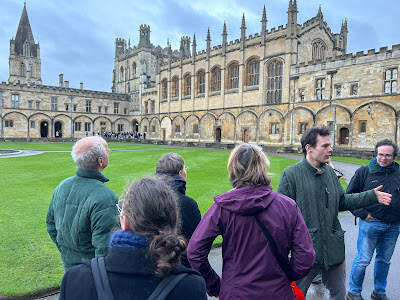
I've spent the last few days in Oxford, attending and presenting at a workshop on methods for understanding emotions in Old Norse literature.

The study of emotions in different historical periods has been a significant field of enquiry in the Humanities for a couple of decades, and has seen the publication of a growing number of papers and books about the topic in Old Norse studies, too. The workshop I attended was a very collaborative one that was used as a step towards the production of a new book of essays, coordinated and edited by Gareth Evans of St John's College, Oxford University and Brynja Þorgeirsdóttir from the University of Iceland. My chapter, on creative approaches to understanding emotions in Old Norse literature, will suggest ways we can adapt creative writing methods to generate new research questions in the area.


For me, the trip has also marked a welcome return to Oxford, where I spent some three months in the winter of 2023-2024, and began work on my current creative writing project, one now nearing (some form of) completion. In a wider sense, it is also a return to places that are part of my family's history, that is, my English side that was here before migrating to Australia: my mother, Susan, was born in Oxford and her father, Harold, served as a policeman not far from here.

Surprise coalescences are, I suppose, something one finds in many places, but I find them particularly resonant here, and then somehow also in how Oxford's gothic architecture seems always to present staggered views, layers, and worlds within worlds.


Friday, December 15, 2023

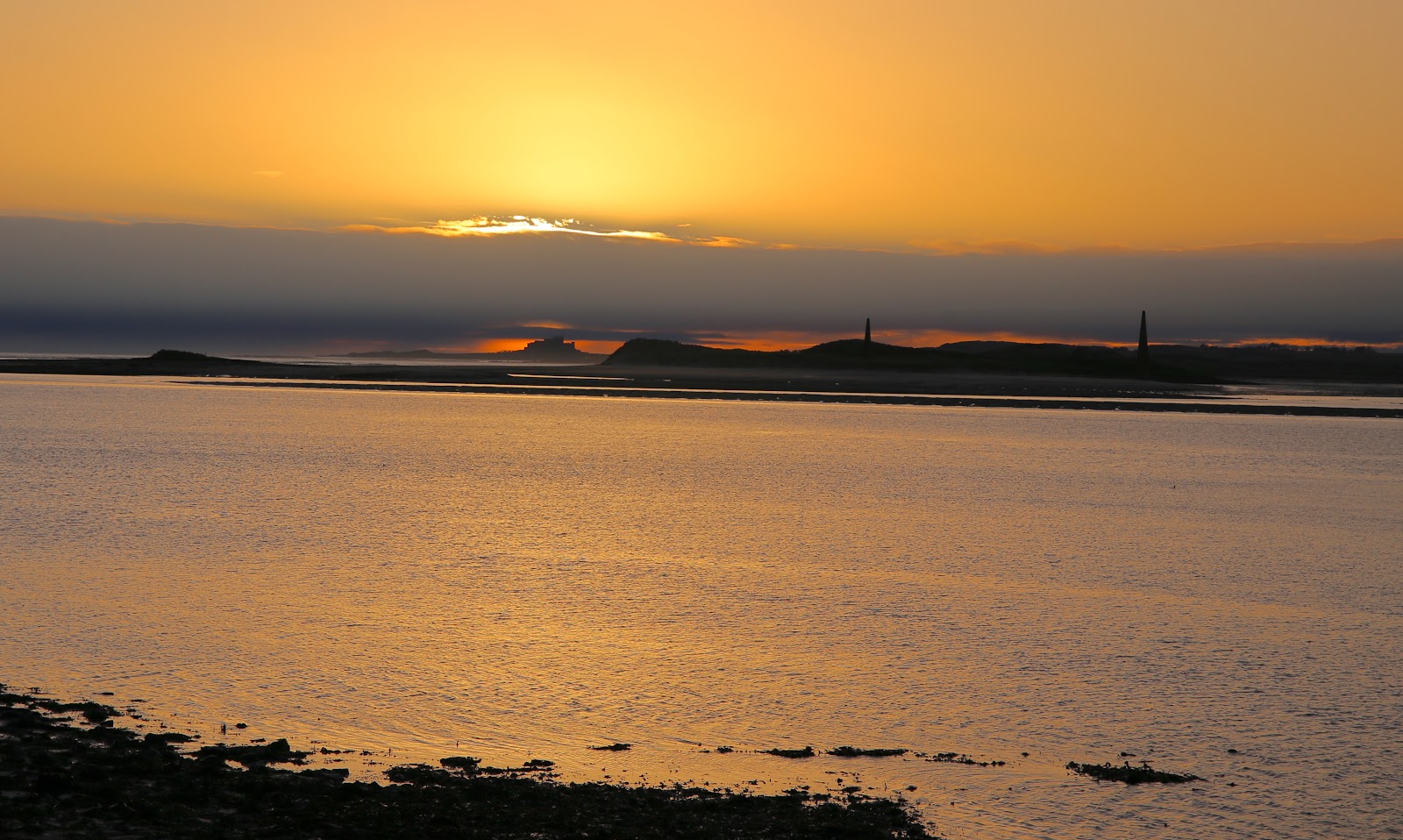
Sunrise at Lindisfarne

Earlier this week, I travelled to Lindisfarne, also known as Holy Island, off the Northumbria coast. The island was the site of a Viking raid in the summer of AD 793 that is often cited as the beginning of the Viking Age, for the raid was thought to mark a new ferocity in the Norse incursions into Britain. 

These days, historians tend to emphasise that raids of various kinds were taking place before then and in other countries, and that we need to be cautious about claiming start dates of this kind. But, all the same, Lindisfarne remains very central in the story of the terrors that Vikings inflicted in the eighth to tenth centuries, and in accounts of their attacks on undefended abbeys and other Christian holy sites, in particular.

Though the island is separated from the mainland by a tidal plain that can only be crossed at low tide, it is also noticeably open and unprotected: it seems to greet the sea and the countryside around it. At sunrise on a clear winter's day, the stillness and peacefulness of the area made the island's choice as the site of an abbey seem perfectly understandable, even all this time on. A place that was both apart and part of its surroundings.


Friday, November 17, 2023

Remembering the St Brice's Day Massacre of AD1002

On Sunday and Monday just gone, I attended a series of events in Oxford marking the anniversary of the St Brice's massacre in the year AD 1002. The events were organised by St John's College, where in 2008 a mass grave of the remains of thirty five young males and two children were discovered, and which were subsequently tied to a decree that was issued by King Aethelred the Unready (ruled 978-1013 and 1014-1016) that instructed his English subjects to kill all the Danes in England.

It seems that the men and children who were killed that day were settled in Oxford, and probably lived on the fringes of the main town, in an area now known as St Clement's. But even though they were part of Oxford society, clearly they were also still seen as foreign, that is, as Danish outsiders, and thus were associated with Viking raids on England that the King was struggling to repel. They became the scapegoats for the wider problem of Norse incursions and the violence these brought.

The evidence suggests that the Danes were not in a position to defend themselves, and were fleeing their attackers as they were killed. They fled to St Frideswide’s church that was located where Christ Church College of Oxford University now sits. They hoped to find sanctuary in a building committed to God. But when their pursuers couldn't force the Danes out, these pursuers set fire to the church. 

The horror of that day feels like an inversion of much of what we think of the Vikings who raided Britain and the Danes who occupied large parts of the country from the ninth to eleventh centuries. For, this is a story of partial integration, vulnerability, and defencelessness. It reminds us that the broad sweep of historical narratives is always incomplete.

The events to commemorate the St Brice's Day massacre were varied. They included a walking tour of the evidence of Anglo-Saxon Oxford, lectures by Professors Carolyne Larrington, David Griffiths, and Caroline Wilkinson, and a panel discussion hosted by forensic anthropologist Professor Dame Sue Black that also featured author Amy Jeffs, who has written on English folk tales, and Angie Bolton, who is Curator of Archaeology at Oxfordshire Museum Services and oversees the preservation of the Viking remains that were found at St John's College. It was very touching to hear Angie Bolton say that she says hello to these remains whenever she goes into the area of the museum where they're kept; she feels it's important to talk to them.

A DNA test was performed on one of the skeletons, SK1756, a young man who had been struck with a sword and stabbed many times. In a remarkable piece of matching, the young man's remains were identified as a near relative of a man whose skeleton had been found in Denmark. In 2021, SK1756 was taken back to Denmark for a visit, and for a time was reunited with his relative in a special exhibition at the Danish National Museum in Copenhagen. 

At the commemoration this week, a reconstruction of his face, undertaken by FaceLab of Liverpool John Moore's University, was also revealed.

The reconstructed face of one of the victims of the AD 1002 St Brice's Day Massacre
(Source: https://www.sjc.ox.ac.uk/discover/news/remembering-st-brices-day-at-st-johns/)

A walking tour of Anglo-Saxon Oxford arrives at what is now Christ Church College

The grounds of St John's College, Oxford


Tuesday, October 24, 2023

Impossible Inhabiting

In my last post below, I mentioned a scholarly article that I co-authored on the topic of creative practice research in Old Norse-Icelandic studies.

I've taken a slightly different approach to this topic in a piece that I've just written for the magazine Kill Your Darlings. There, I reflect on the apparent impossibility of fully inhabiting the perspectives of those who lived a long time ago and in very different circumstances from ours, but also on the necessity one feels as a writer to attempt that inhabiting. After all, I do want to better understand the people of the past, and to do so through creative writing involves a portrayal of their inner lives. 

The piece steps through these topics while also traversing the fields of Haukadalur, where much of the action of my novel The Sorrow Stone takes place.

It is available online here.


Walking in Haukadalur


Tuesday, October 3, 2023

Creative Practice as Research in Old Norse-Icelandic Studies

I recently collaborated with fellow writer-academic Lisa Bennett on a scholarly article that explores the potential of creative practice as research in Old Norse-Icelandic studies, in particular through the adoption of female characters' points of view in contemporary re-tellings of the Sagas of Icelanders (or, Íslendingasögur).

The article is structured as a dialogue between Lisa and me, a format that allows us to develop the topic in relation to each other's creative practice, namely Lisa's new book Viking Women and my novel The Sorrow Stone. 

The article is open access and available here. 


Thursday, August 17, 2023

Saga-telling modes

Last week, I spoke about the Icelandic sagas at Melbourne's Sophia Club, which is a live philosophy series that also holds events in London and New York, and that is part of the philosophy magazine Aeon. The club's events take a multimodal approach to the topics covered, and on this occasion included saga readings by actor Eloïse Mignon and original musical performances by Erkki Veltheim and Aviva Endean (details here). 

The format consisted of interview questions about medieval Iceland and its literature and society that were put to me by the director of the club, Brigid Hains, with our discussion then interspersed with Eloïse's readings from Njáls saga (Gunnar's decision to refuse exile and stay in Iceland), Laxdæla saga (Guðrún's dreams), and Grettis saga (Grettir's fight with Glámr). The musicians Erkki and Aviva played while the readings were going, improvising responses to the text and the emphasis in the story. At the end of the night, I gave a performance of the first two verses of the hymn 'Heyr himna smiður', in part because the sagas as we have them are the products of a medieval Christian society (as are the words of the hymn, which were composed by the chieftain Kolbeinn Tumason, who lived from 1171-1208), but also because I find it's a fitting way to end the night.


The event reminded me of how different art forms can reveal the properties of a source text in different ways. This idea was central to the Saga Land project I undertook some time ago, which consisted of a radio series, live performances of the sagas, as well as a co-authored book. It was a key part of why I wrote The Sorrow Stone, which adopted the conventions of historical fiction in order to re-tell parts of Gísla saga. It's also an idea I'll be exploring further in the coming months when, in late October, I travel to Oxford to undertake research into the role of creative practice as a research methodology in Old Norse-Icelandic studies. 

Rather like those endeavours, the Sophia Club event last week was given an extra dimension by place and setting, which was the large but also intimate-feeling Brunswick Ballroom, recently renovated, and which with its wooden floors and small table settings created the atmosphere of a discussion that was being shared with everyone in the room.


Tuesday, December 14, 2021

Brisbane Powerhouse book event

On Sunday 27 February, I’ll be celebrating the publication of my novel, The Sorrow Stone, with an afternoon event at Brisbane Powerhouse that will feature conversation, storytelling, and sagas inspired by the book. 

The event will be hosted by co-presenter of ABC Conversations Richard Fidler.

I hope to see you there!

More info and tickets can be found at: https://brisbanepowerhouse.org/whats-on/event/kari-gislason/


Haukadalur in the Westfjords


Monday, December 13, 2021

Retelling the Icelandic Family Sagas

I have recently published a scholarly article in Postmedieval Journal about the process of adaptation that occurred during the Saga Land project I undertook with Richard Fidler.

This project had its genesis as a four-part radio program, which then became the basis of a stage show first performed at the Brisbane Powerhouse Theatre. Subsequently, Richard and I wrote a book, Saga Land: The island of stories at the edge of the world, that expanded on the material in the radio and stage versions and also included new and very varied stories about Icelandic culture and society.

In some ways, the iterative and adaptive approach that shaped the project echoed the transformation of saga stories during their early conception, performance, and written transmission as manuscripts and compendia. Thus, the article suggests that the process of composition and adaptation can itself be a point of dialogue between old stories and how they are retold today.

It's available here.

Drawing at Thingvellir, 1999 (photo: Kári Bergsson)


Tuesday, July 27, 2021

The Sorrow Stone


My fourth book, The Sorrow Stone, will be published by UQP in March 2022.

This book tells the story of Disa and her twelve-year old son Sindri, who are on the run after Disa has committed a revenge attack and is forced to flee her home. It draws on two of Iceland's family sagas, The Saga of Gisli and Eyrbyggja saga, to re-imagine events from the point of view of a character who is central to the intense action and drama of these works but whose perspective is largely missing.

During their escape, Disa and Sindri cross the valleys and fjords of western Iceland, which I also visited as part of my research for this novel.


Monday, December 10, 2018

Charts


It's been lovely this week to see Saga Land reappearing in the History bestseller charts - a year on from the book's original publication date in October 2017.

Last September, the soft back edition of the book came out. It has the same sensational Oetomo New cover design as the hardback, but with a white background.

The soft back edition of Saga Land
*

This week's Top 10 History books (source: The Age)


Friday, September 28, 2018

Helgafell

I've spent the last few days at the farm of Helgafell, which is on Thorsnes peninsula in mid-west Iceland.

The farm has lots of sheep and produces excellent lamb, and there are two huts by the pond (or, small lake) that you can rent. The view from them is over the water and, to the right, towards Helgafell mountain (or, hill), which was first described in the medieval Icelandic Eyrbyggja saga as an entrance to Valhalla. The area was dedicated to Thor.

Later, the hill and the property around it acquired a Christian significance. Guðrún Ósvífursdóttir, whose life story is given in Laxdæla saga, ended her days here as Iceland's first nun. At the very beginning of the Christian period, the local chieftain Snorri goði built one of Iceland's first churches on the land once dedicated to Thor.

I've loved being here, and walking around the property and the extraordinary countryside around it. The farm is surrounded by lava fields and fissures, and volcanic stubs that seem to climb up from the bays nearby. Today, as I write, it's blowing a gale and hardly weather to go looking around. But on other days I've had wonderfully still conditions, and a good chance to watch the changing colours of the farm without having to rush back inside to get warm.


My map of the Helgafell farm

The nearby Berserk's Path


Sunday, September 23, 2018

Haukadalur

I've spent the last couple of weeks travelling in Iceland on the trail of two medieval sagas - The Saga of Gisli and Eyrbyggja Saga. The two works are closely connected by geography, as well as by a couple of the characters who exit the terrible events of one saga only to be cited in the occurrences of the next.

My journey's taken me first to Haukadalur, a valley in Dyrafjördur in the Westfjords which I've visited a few times before but never stayed at for more than a few hours. This time, I rented a cottage in the valley that used to serve as the local pre-school, now converted into a holiday home.


I spent some days walking: up into the valley itself, but also around other farms and places mentioned in The Saga of Gisli, such as: the site where the local assembly used to be held; Undir Hesti, where Vésteinn (Gísli's best friend) lived; and, Gemlufallsheidi, where Vésteinn famously decided to ride on to the autumn feast being held by his friend despite a warning to stay away.

The streams running to Dyrafjodur in Gemlufallsheidi
When I left Haukadalur, I drove on a slippery mountain road south to Tálknafjördur, where one of the saga characters came from: Asgerd. The fact that she's from this particular fjord isn't a big deal in the saga, but the more I read this work the more concerned I've become with its precise geography. So, I went and found rather lovely beaches braced by great blocks of mountain cliffs. Asgerd's farm was, as in many parts of the Westfjords, wedged along the rather thin strip of usable land.

Tálknafjördur
Throughout the trip so far, I've been struck by the interchange of inhospitable country - heaths, volcanic mountains, and cliffs close to the sea - and suddenly-appearing pastures.

Hvammur on the northern shore of Breidafjördur (not far from where the Brjánslækur ferry comes in) is one such place, a fertile part of the coastline in-between the rock mountains of the Westfjords and the pink, sandy volcanic dunes further along the fjord. It's where Gisli's brother Thorkel lived after Gisli was outlawed, and where Gisli came to ask him for help while he was living on the nearby Hergilsey Island.

The present-day farm at Hvammur

*


Thursday, November 16, 2017

First Days Saga Land

Saga Land, a book I've co-authored with Richard Fidler, has been out for around three weeks now, and over that time Richard and I have been travelling the country for interviews, talks, and performances of the saga stories that we feature in the book.

About a year ago, we were in Iceland writing the winter parts of the book. Since then, Saga Land has moved rather quickly through the various tasks of writing to editing, and now to publishing and promoting a book beautifully produced by HarperCollins/ABC Books.

Our first trip to Iceland was in summer, when there isn't really any night to speak of. Then, the darkness of an Icelandic December, and now it's out in the blue light of Australian spring. On our book tour, much of the time that we've spent talking about the book has been inside radio studios or quiet, darkened performance spaces. It's as though Saga Land always steps between shadows and light, winter and summer.

*

Church of All Nations, Carlton
We began in Melbourne, on ABC breakfast TV, in an interview with Jon Faine on his Conversations radio program, and then a book talk at the Church of All Nations in Carlton. Then to Adelaide for shows at Elder Hall and Burnside Library, and to Sydney for a series of bookshop events. Rather as in the book, during our talks Richard and I take turns in narrating parts of our Iceland travels, while in Queensland we gave return performances of the Icelandic Sagas show that we performed last year -- again at The Powerhouse Theatre, and also this time at the Empire in Toowoomba.

Saga Land set (pic Matt Howard)
Rehearsals at the Empire Theatre, Toowoomba (pic Richard Fidler)


From behind the projection screen, Powerhouse Theatre (pic Jane O'Hara)


Sofdu unga astin min
Elder Hall, Adelaide

With Richard and Hannah Kent, Adelaide (pic Matt Howard)
*
I adored this book. Kári Gíslason and Richard Fidler have gathered together a wondrous compendium of Iceland's best sagas, both old and recent, and woven these together with their own experiences of that storytelling nation. Each folktale, each account of warring 12th century families, is presented as part of a wider tapestry of story, including those of the authors' lives. Saga Land is testament to the power of all sagas, as a means of connection and self-realisation. A tremendous achievement.


- Hannah Kent

Dymocks Tuggeranong, ACT

Fuller's Bookshop, Mornington Peninsula
Best new nonfiction, November, Indie bookshops

Top 10 Australian independent bookshops
During our book tour, we've given quite a few interviews, links to which I've started to gather here. They include Richard Glover's interview on his Sydney Drive program, and Rebecca Levingston's touching response to the book when we spoke to her for Weekends Brisbane. I like talking to people about the books I've written, although I admit it also has the uncanny feeling of flying out of a quiet winter and then landing thousands of miles away in another season altogether.

At the same time, the first reviews and reader responses have begun to appear, opening the pages and letting in their own light on what we've described in Saga Land.

*


Fidler and Gíslason embarked on a journey to Iceland with two purposes: to make a radio documentary retelling some of the sagas from the places where they happened, and to discover whether Gíslason really is descended from Sturluson. Saga Land records their two trips to Iceland, one in summer, and one in winter. The radio program went to air in 2016 and is now a podcast.


The book is divided into four parts, with Fidler and Gíslason taking turns to tell the story. Both have a gift for bringing the country to life on the page, with the vivid descriptions of the extraordinary landscape, from glaciers to fiords, setting the scene. The sagas themselves – graphic descriptions of fierce blood feuds – are told in crisp, unemotive prose, giving them a powerful sense of immediacy. They are woven skilfully into the narrative of the road trip, as are references to historic events that have taken place in Iceland, including the famous meeting between US President Ronald Reagan and Soviet leader Mikhail Gorbachev in 1986.


A fascinating insight into Iceland's little-known history and literature, and a compelling story of one man's quest to reclaim his identity.


- Nicole Abadee, "Three Best Books of the Month," Australian Financial Review


Saga Land Christmas tree, Dymocks Sydney

Burnside Library, South Australia

Route 372, Brisbane